

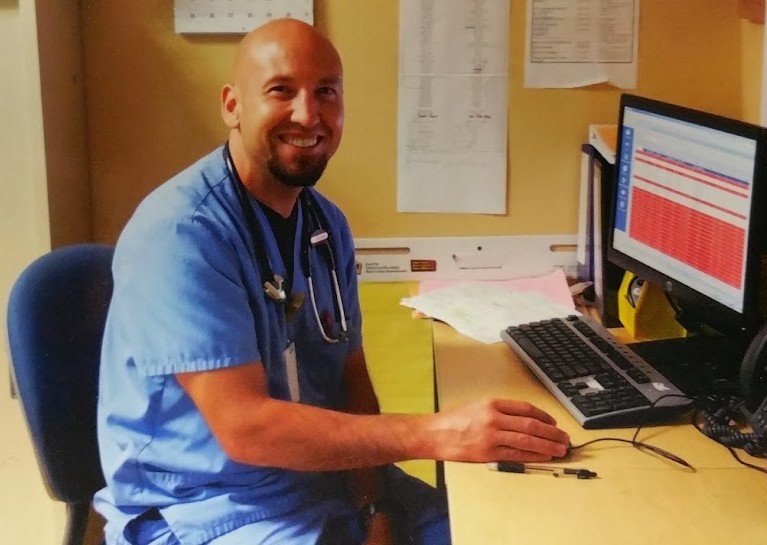
Why I Do This
I didn’t get into insurance because I wanted to sell insurance.
I got into it because of what I’ve seen firsthand, the people I’ve cared for, and what those experiences taught me about protecting the people we love.
My Background
My career has taken me through several very different worlds.
I began in engineering, working in complex technical environments where details mattered and problems had to be solved correctly. I later spent about a decade in real estate, helping people through some of the biggest financial decisions of their lives.
After that came land development, where I worked with engineers, contractors, municipalities, utilities, investors, budgets, and large projects that required careful planning and follow-through.
Those careers taught me a great deal about responsibility, money, property, planning ahead, and the importance of getting major decisions right.
But healthcare changed the way I look at life.
What Healthcare Taught Me
I spent nearly a decade as a respiratory therapist at a very busy Sacramento hospital, including working through the COVID-19 pandemic, and I remain a licensed respiratory therapist today.
I worked throughout the hospital, including the emergency department and intensive care unit. I cared for children, adults, elderly patients, and people approaching the end of their lives.
I also spent years working directly with patients and families in their homes, educating them on life-support equipment and helping them understand how to safely care for themselves or someone they loved.
I became close with many of my patients and their families.
That part of healthcare always mattered to me.
It wasn’t enough to simply perform a treatment, manage a ventilator, or explain how a piece of equipment worked. I wanted people to understand what was happening to them. I wanted them to feel comfortable asking questions. And I wanted families to have the information they needed to make the best decisions they could for themselves and the people they loved.
Over those years, I also witnessed something most people thankfully never have to see.
I saw men and women in their 40s, 50s, 60s, 70s, and 80s who appeared completely healthy from the outside.
Some came into the emergency department dressed for an ordinary day. Their hair was done. Their clothes looked nice. Some women had their makeup on perfectly. They looked like someone you might have passed at the grocery store, sat next to at a restaurant, or spoken with at work just hours earlier.
And suddenly they were in cardiac arrest.
As a respiratory therapist, I wasn’t watching from the sidelines.
I performed chest compressions. I manually ventilated patients when they could no longer breathe for themselves. I managed ventilators and airways and worked directly with physicians, nurses, and other members of the emergency and critical-care team doing everything we could to save a life.
Sometimes we succeeded.
Sometimes, despite everything we did, we couldn’t save them.
And sometimes their family was right there.
I have watched husbands lose wives, wives lose husbands, children lose parents, and parents lose children.
When you have personally put your hands on someone’s chest trying to keep their heart circulating, helped breathe for them, and then watched a family realize that the person they love is not coming home, it changes the way you look at life.
After seeing that happen many times, one truth became impossible for me to ignore:
None of us knows when our last day will be.
What Happens to the Family
I also saw what happened after the medical emergency was over.
The grief alone can be overwhelming.
Then, for some families, the financial reality begins.
The income may be gone, but the mortgage is still due. There may be final expenses, medical bills, car payments, credit cards, children to support, and a household that may have been built around two incomes suddenly depending on one.
I have seen families face financial burdens that can follow them for years.
When someone has just lost a husband, wife, parent, or child, they should be able to grieve.
They shouldn’t also have to wonder whether they can keep their home or how they are going to financially survive the months and years ahead.
That stayed with me.
I have also seen how much of a difference preparation can make.
Financial protection will never take away grief. Nothing can.
But it can mean the mortgage continues to get paid. It can mean children remain financially secure. It can mean final expenses are handled without placing the burden on relatives. It can give a surviving spouse time to grieve instead of immediately having to make major financial decisions.
It can give a family choices when they need them most.
Why I Work in Insurance Today
That is what I think about when I sit down with someone today.
I don’t see a policy.
I don’t see a commission.
I see the family behind the person sitting in front of me.
I think about the husband or wife who may someday be sitting alone at the kitchen table trying to figure out what happens next.
I think about the children.
And I think about the families I met during my years in healthcare who would have given anything to have one less burden placed on them during one of the hardest moments of their lives.
That is why my job starts with listening.
I want to understand where you are, what you already have, what you are trying to protect, what you can comfortably afford, and what is important to you and your family.
Then I explain the options in plain English.
No pressure. No complicated sales pitch.
If what you already have is enough, I’ll tell you.
If something doesn’t make sense for your situation, I’ll tell you that too.
My years in engineering taught me to pay attention to details and solve problems.
Real estate taught me how much a home means to a family and how important major financial decisions can be.
Land development taught me to look ahead, plan carefully, and understand how many pieces have to come together to build something that lasts.
Healthcare taught me how quickly life can change.
And all of those experiences taught me one principle that I try to carry into every conversation I have today:
Do the right thing for people.
That is what I want my clients to know about me.
This isn’t about selling someone an insurance policy.
It’s about helping families make good decisions today so the people they love are protected tomorrow.
— Jason Cheshire
Licensed Life & Health Insurance Professional
Licensed Respiratory Therapist